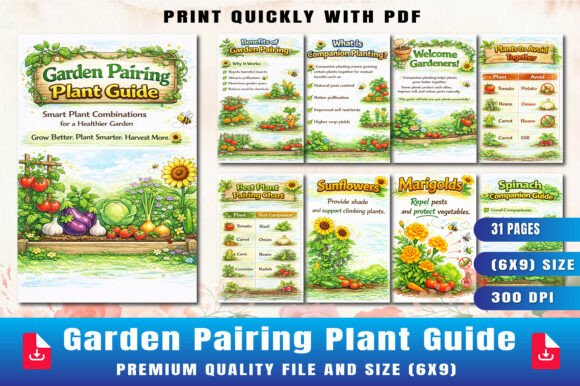
Garden Pairing Plant Guide
Creating a thriving garden doesn’t just depend on the right soil or ample sunlight—it also requires thoughtful planning of what plants grow together. The Garden Pairing Plant Guide offers a comprehensive, easy-to-follow approach to companion planting that helps you build a more productive and eco-friendly garden. With 31 pages of expert advice, this guide is designed for both beginners and experienced gardeners who want to harness the natural synergy between plants.
What Is Companion Planting?
Companion planting is the practice of growing different plants together to enhance growth, deter pests, improve soil health, and maximize space in your garden. This ancient technique has been used for centuries by farmers and gardeners around the world. By understanding which plants thrive alongside each other, you can create a balanced ecosystem that supports healthy plant development without relying heavily on chemical fertilizers or pesticides.
The Garden Pairing Plant Guide breaks down the fundamentals of companion planting in an accessible way. It explains how certain plants can repel harmful insects, attract beneficial pollinators, and even improve each other’s nutrient uptake. Whether you're growing vegetables, flowers, or herbs, this guide provides insights that help you make informed decisions about your garden layout.
Why Use the Garden Pairing Plant Guide?
This guide is more than just a list of compatible plants—it's a strategic resource that empowers gardeners to design their spaces with intention. Here are some of the key benefits:
- Natural Pest Control: Learn which plants work together to keep common garden pests at bay, reducing the need for synthetic chemicals.
- Improved Soil Health: Discover how certain plant pairings can enrich the soil with nutrients, making it more fertile for future crops.
- Better Space Utilization: Maximize your garden’s potential by using vertical space and intercropping techniques.
- Increased Yield: Grow more food in less space by pairing plants that support each other’s growth.
Whether you’re cultivating a small backyard garden or managing a larger homestead, the Garden Pairing Plant Guide offers practical solutions that align with your goals. Its clean white background and colorful section headings make it easy to navigate, while the inclusion of garden icons adds a visual appeal that makes learning enjoyable.
Vegetable Pairing Guides
The guide includes detailed sections on pairing specific vegetables with complementary plants. For example:
- Tomatoes: Grow tomatoes alongside basil to enhance flavor and deter pests like aphids and hornworms.
- Carrots: Pair carrots with onions or leeks to naturally repel carrot flies.
- Cucumbers: Cucumbers benefit from being planted near nasturtiums, which act as a trap crop for aphids.
- Peppers: Marigolds are excellent companions for peppers, as they help repel nematodes and other harmful insects.
These pairings not only help protect your plants but also promote biodiversity in your garden. The guide goes beyond simple lists, offering insights into why certain combinations work well together and how they contribute to overall garden health.
Flower and Herb Pairings
While vegetables often take center stage in gardens, flowers and herbs play a crucial role in supporting a healthy ecosystem. The Garden Pairing Plant Guide explores creative ways to incorporate these plants into your landscape.
For instance, marigolds are known for their ability to repel pests, making them an ideal companion for many vegetables. Sunflowers can be planted alongside beans to provide shade and support for climbing plants. Lavender pairs well with rosemary, creating a fragrant and visually appealing herb garden that also attracts pollinators.
Herbs like basil, mint, and thyme are not only useful in the kitchen but also serve as natural pest deterrents when planted near vegetables. The guide provides clear instructions on how to integrate these plants into your garden, ensuring that you get the most out of every square inch of space.
Quick Reference Charts and Practical Tips
To make it easier for readers to apply the information, the Garden Pairing Plant Guide includes quick reference charts that highlight the best plant pairings. These charts are organized by plant type, making it simple to find compatible combinations based on your specific needs.
In addition to the charts, the guide offers practical tips for implementing companion planting in your garden. From preparing the soil to spacing plants correctly, these recommendations ensure that you set your garden up for success from the start.
For those who prefer digital formats, the high-resolution JPG files and print-ready PDF file make it easy to access the guide on any device or use it as a physical reference in your garden shed. The professional print quality ensures that the guide looks great whether you're reading it on your tablet or printing it out for your gardening team.
Who Can Benefit from This Guide?
The Garden Pairing Plant Guide is suitable for a wide range of users, including:
- Beginners: Those new to gardening can use the guide to learn the basics of companion planting and create a successful garden from scratch.
- Backyard Gardeners: Home gardeners looking to maximize their limited space will find valuable strategies for growing more with less.
- Homesteaders: Individuals focused on self-sufficiency can use the guide to build a sustainable, productive garden that supports their lifestyle.
- Educators: Teachers and community leaders can incorporate the guide into educational programs or workshops on sustainable gardening practices.
No matter your level of experience, the Garden Pairing Plant Guide provides actionable advice that helps you achieve your gardening goals. Its structured format and clear explanations make it easy to follow, while its colorful design keeps the content engaging and accessible.
Getting Started with Companion Planting
If you're ready to transform your garden with the power of companion planting, the Garden Pairing Plant Guide is the perfect starting point. Begin by identifying the plants you want to grow and then consult the guide to find compatible companions that will support their growth.
As you experiment with different pairings, you'll develop a deeper understanding of how plants interact with one another. Over time, you’ll be able to create a thriving, balanced garden that not only produces abundant harvests but also supports the environment in a meaningful way.
With its blend of practical guidance and creative inspiration, the Garden Pairing Plant Guide is an essential tool for anyone who wants to grow a healthier, more productive garden. Whether you're looking to reduce your reliance on chemicals, increase your yield, or simply enjoy the beauty of a well-planned garden, this guide has something to offer everyone.